
Medicaid & Workers'Comp
the connections.

Workers comp and Medicaid are intertwined.
First, a few factoids about Medicaid.
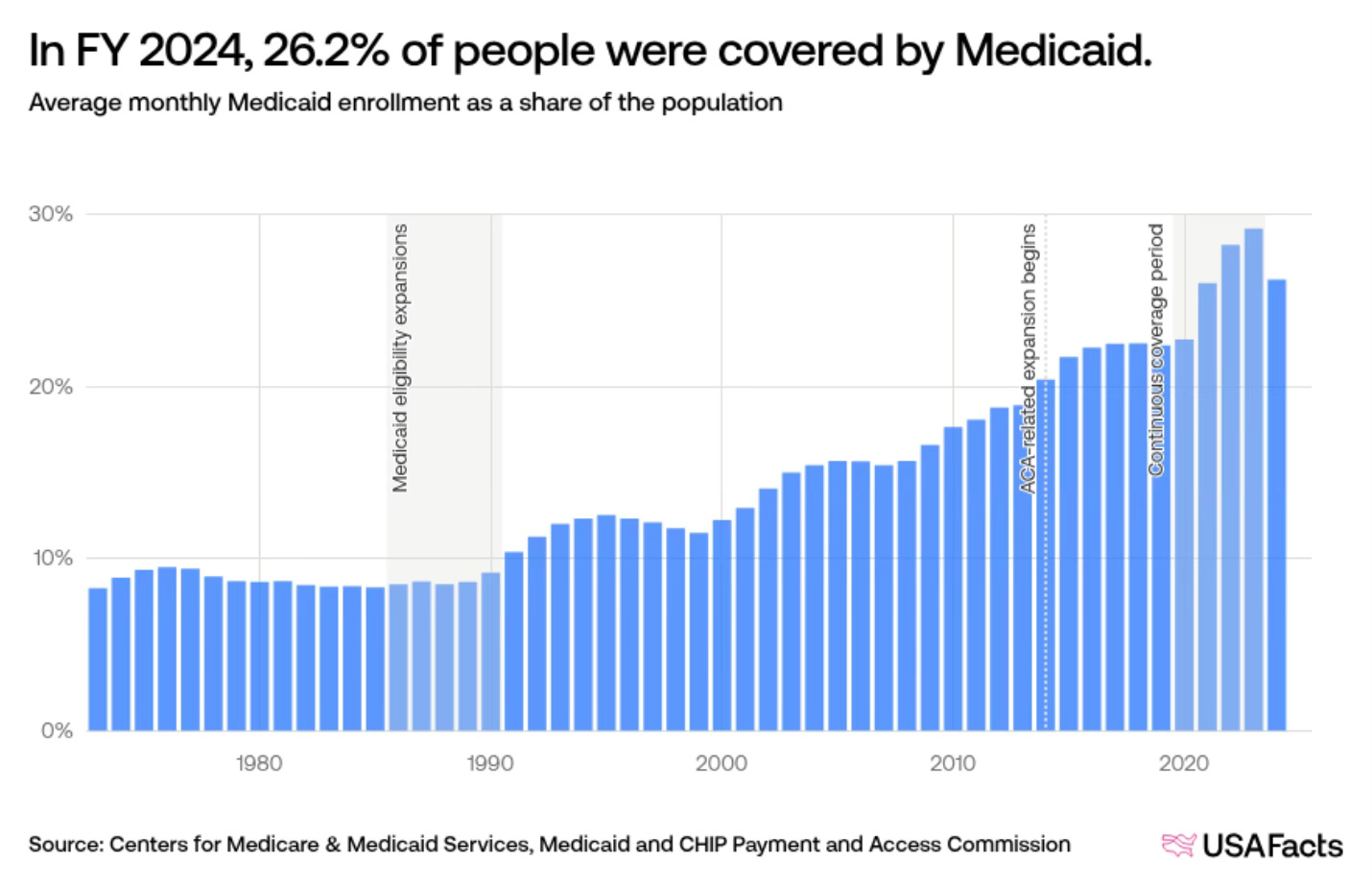
One out of four Americans are covered by Medicaid.
Medicaid accounts for about 17% of US medical spend (work comp is about 0.74%)
It is very state-specific; states have a lot of control over who and what’s covered.
Federal and state funds pay for Medicaid, with the Feds covering about 62% of total costs (on average)
Most Medicaid recipients don’t pay deductibles, copays, or co-insurance. (Indiana is one exception)
Medicaid covers millions of people in working families.
Let’s dig into this last datapoint, as it has implications for workers’ comp.
63% of Medicaid recipients have at least one family member working full time. This varies among states, from 77% in Colorado to 51% in Rhode Island. 15% have a part time worker.
Only 1/5th of recipients’ families have no one working.
Many employers that don’t provide health insurance &/or aren’t required to provide health insurance under ACA recommend workers who qualify sign up for Medicaid.
Implications...
More workers are covered by Medicaid now than were pre-ACA
Medicaid’s health “benefits” are similar to work comp
Claiming behavior may well be influenced by coverage status
Next, employment.
Most credible studies indicate Medicaid expansion increased employment in states that expanded Medicaid.
Implications
More employment = more payroll = more workers’ comp premium and more claims (NOT higher frequency, which is a percentage and not a raw number)
There are a number of other benefits for states that expanded Medicaid - an excellent summary of all available research is here.
What does this mean for you?
Workers’ comp has done quite well since ACA’s full implementation; reductions in Medicaid will almost certainly have the opposite effect.
Note - if you want to argue or discuss, fine - cite sources and data to support your assertions.