
No workers, no healthcare
And Florida is in deep trouble.

More than 80,000 healthcare workers are about to lose their jobs - and there’s no one to replace them.
Which means:
injured workers who need help getting out of bed, using the bathroom, bathing and getting dressed are on their own
what does this mean for reserves, meeting your claimants needs, and potential litigation?
you are going to become your mom’s/grandma’s care taker
hospitals - already facing a worker shortage - will have to curtail operations, reduce services, and ask for relief from mandated staffing levels.
Because Americans are not going to do the work Haitians have been doing for years.
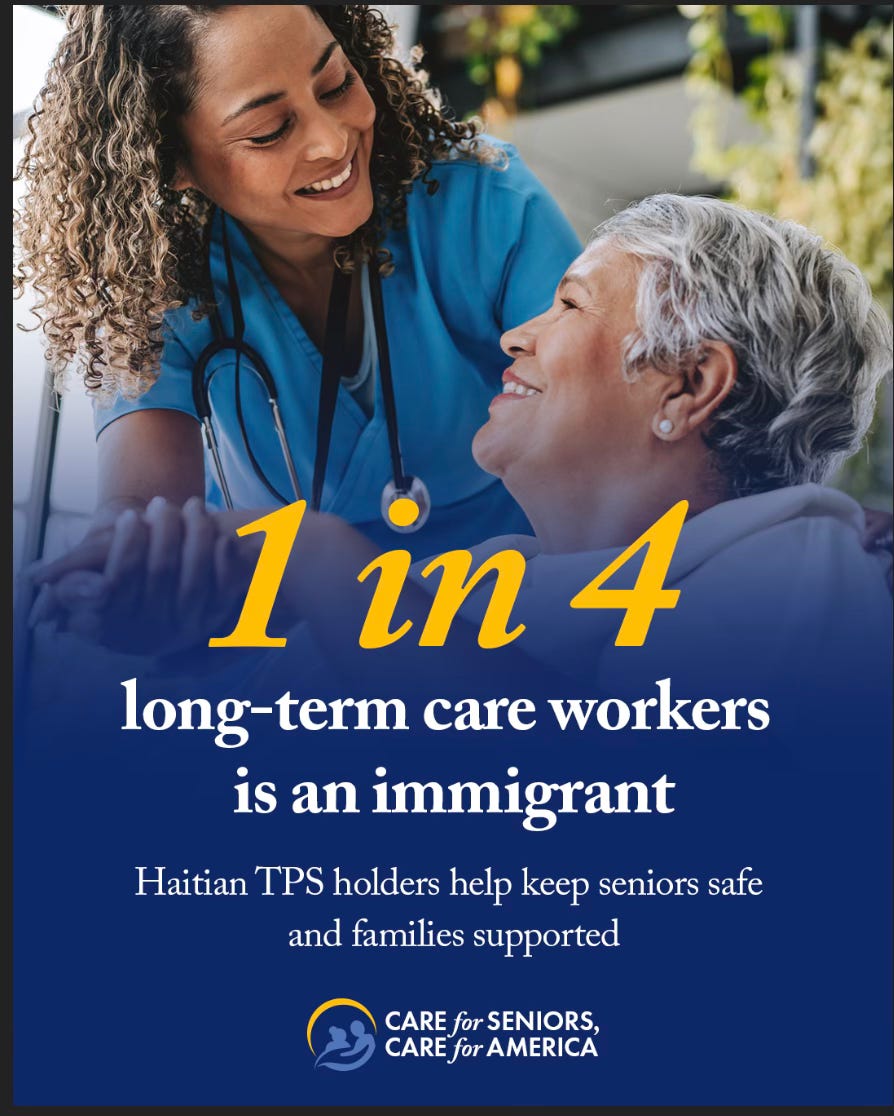
That’s what the Supreme Court just did by allowing the Trump Administration to end Temporary Protected Status for more than 300,000 Haitians and tens of thousands of other immigrants.
And that’s just the beginning, as the Trump Administration has made it very clear it will do everything possible to deport everyone it doesn’t want to be here. One of every six healthcare workers was not born in this country, a “status” that leaves many of them vulnerable to deportation.
Here’s how this affects Florida…about 35,000 healthcare workers are affected
In many states, Haitians make up a majority of home care workers - the people who help your mom get dressed, go to the bathroom, bathe and eat.
The crisis will hit nursing homes especially hard…
From JAMA
Nearly half of US nursing homes reported limiting admissions because of staffing shortages,1
only 19% currently meet the minimum staffing levels mandated by the Centers for Medicare & Medicaid Services by 2029.2
Shortages of nurses and other personnel caused two-thirds of hospitals to operate below full capacity in 2023.3
What does this mean for you?
If you’re a work comp insurer, how will you meet your claimants’ needs for home care? And what will this do to reserve calculations?
If you have a loved one in a nursing home, how are you sure they will not suffer?
If you need healthcare in a rural area, you’re likely going to have to travel further, wait longer and hope there’s enough workers to take care of you.